
The Cosmic Dance of Moons and Rings
April 10, 2026
Listen to this lesson:
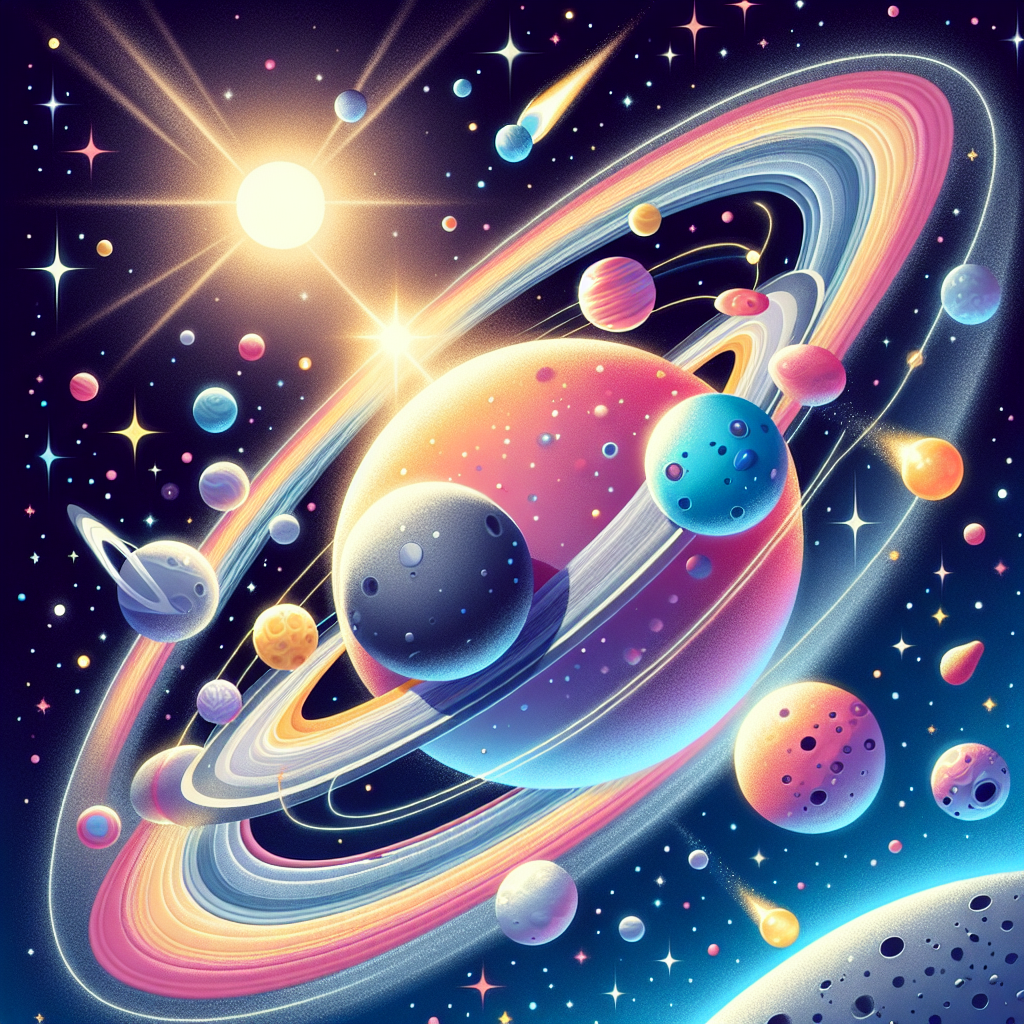
Imagine a world where moons twirl around planets like dancers on a cosmic stage. In our solar system, many planets have their own unique set of moons, each with fascinating features. For example, Jupiter, the largest planet in our solar system, boasts a dazzling collection of over 75 moons! Among them, Ganymede stands out as the biggest, even larger than the planet Mercury. But moons aren't just for show; they play important roles, like creating tides on planets or even helping to form rings.
Speaking of rings, did you know that Saturn isn't the only planet with these beautiful features? Rings are made of countless small particles ranging from dust to chunks of ice and rock. These particles are remnants of comets, asteroids, or even shattered moons. The rings can be vast, stretching thousands of miles across, yet they are surprisingly thin, almost like a cosmic hula hoop.
Moons and rings tell us stories about the past of their planets, hinting at dramatic cosmic events. By studying them, scientists can piece together the history of our solar system and even predict future changes. This dance of moons and rings is a testament to the dynamic and ever-changing universe we live in.
Speaking of rings, did you know that Saturn isn't the only planet with these beautiful features? Rings are made of countless small particles ranging from dust to chunks of ice and rock. These particles are remnants of comets, asteroids, or even shattered moons. The rings can be vast, stretching thousands of miles across, yet they are surprisingly thin, almost like a cosmic hula hoop.
Moons and rings tell us stories about the past of their planets, hinting at dramatic cosmic events. By studying them, scientists can piece together the history of our solar system and even predict future changes. This dance of moons and rings is a testament to the dynamic and ever-changing universe we live in.
Ask Your Kid: How would life on Earth be different if we had rings like Saturn?