
Galactic Gardens: Growing Plants in Space
April 7, 2026
Listen to this lesson:
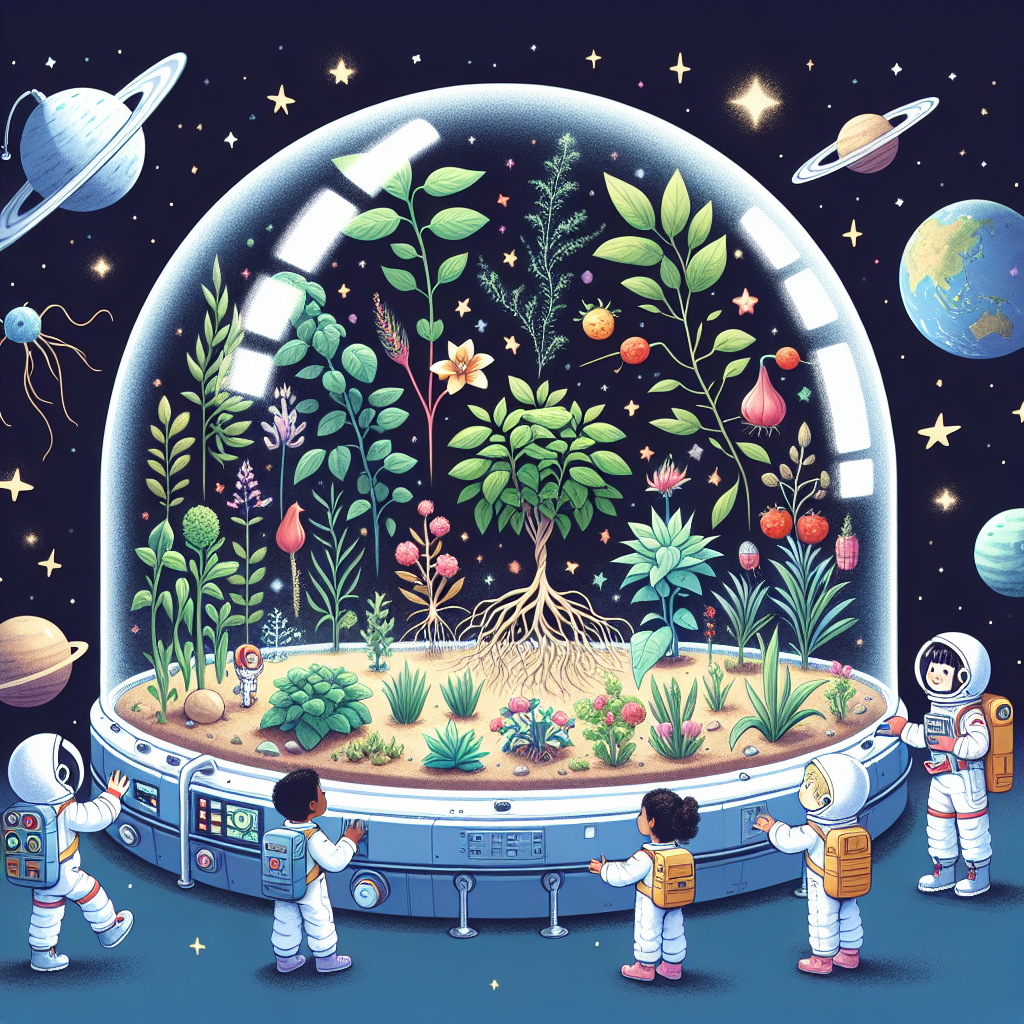
Imagine a garden floating among the stars! In space, astronauts are learning how to grow plants without soil. Instead of traditional dirt, they use hydroponics, a method where plants grow in a nutrient-rich water solution. This technique is perfect for space because it is lightweight and uses less water, which is precious aboard a spacecraft. By monitoring the growth of plants like lettuce and radishes, astronauts help scientists understand how plants adapt to unique conditions like microgravity and artificial light. This knowledge is crucial for future long-term space missions where astronauts will need to grow their own food.
Kids will be excited to learn about how plants can thrive in such unusual environments. The plants are often placed in special growth chambers with LED lights that mimic sunlight. These lights are essential because, just like on Earth, plants need light to perform photosynthesis – the process they use to make food. The chambers also control the temperature and humidity, ensuring the plants have the ideal conditions to grow. By experimenting with different colors of light and nutrient solutions, scientists can find the best combinations to yield healthy and nutritious plants.
Understanding how to cultivate plants in space not only helps astronauts but also inspires new agricultural techniques on Earth. As the global population grows, efficient farming methods are needed more than ever. Astronauts' work with space gardens could lead to breakthroughs in how we grow food in urban areas or places with challenging climates. This exciting field is a testament to how space exploration can yield surprising benefits for life on our home planet.
Kids will be excited to learn about how plants can thrive in such unusual environments. The plants are often placed in special growth chambers with LED lights that mimic sunlight. These lights are essential because, just like on Earth, plants need light to perform photosynthesis – the process they use to make food. The chambers also control the temperature and humidity, ensuring the plants have the ideal conditions to grow. By experimenting with different colors of light and nutrient solutions, scientists can find the best combinations to yield healthy and nutritious plants.
Understanding how to cultivate plants in space not only helps astronauts but also inspires new agricultural techniques on Earth. As the global population grows, efficient farming methods are needed more than ever. Astronauts' work with space gardens could lead to breakthroughs in how we grow food in urban areas or places with challenging climates. This exciting field is a testament to how space exploration can yield surprising benefits for life on our home planet.
Ask Your Kid: Ask Your Kid: If you were an astronaut, what type of plant would you like to try growing in space and why?