
Journey Through Cosmic Colors
March 12, 2026
Listen to this lesson:
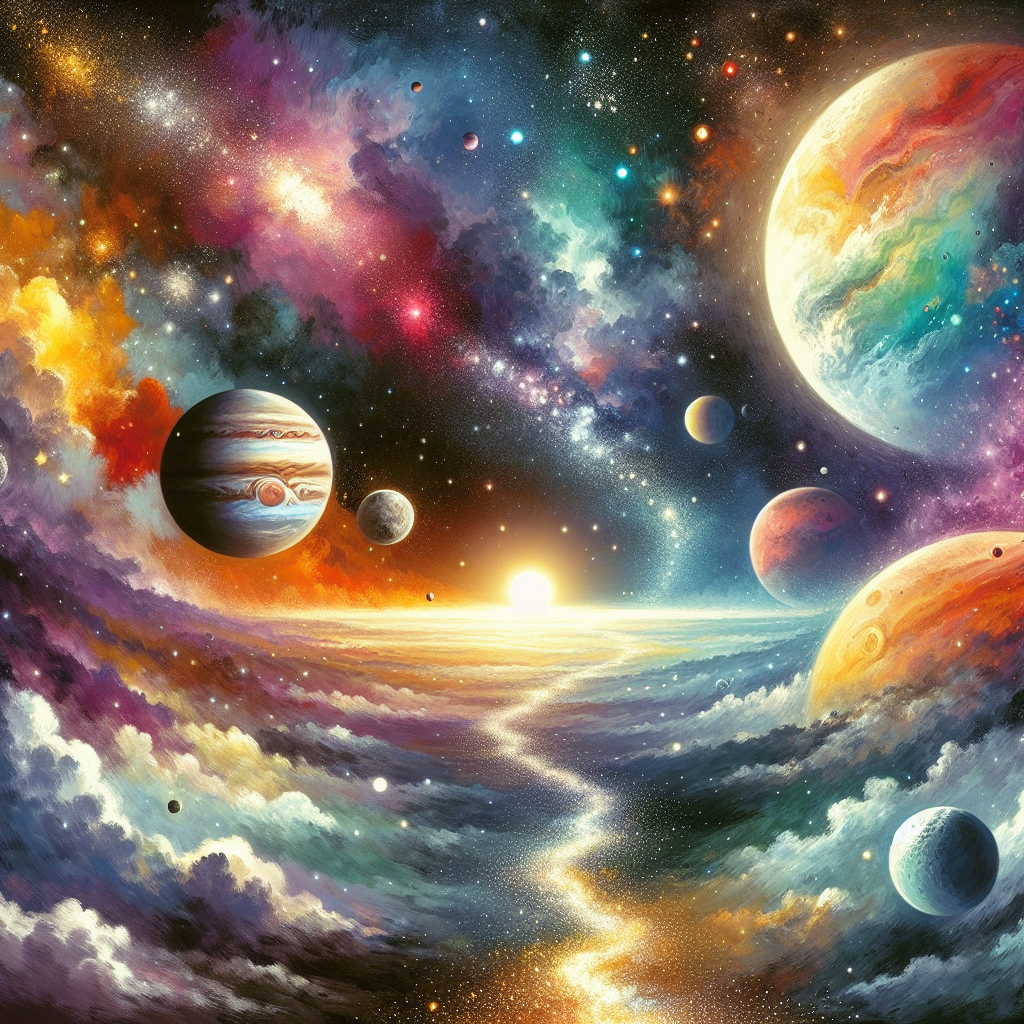
Welcome to a vibrant exploration of space where colors tell the story of the universe! Imagine the cosmos as a giant painting, with stars, planets, and galaxies each shining in unique shades. Stars, for instance, twinkle in different colors based on their temperatures. The hottest stars glow blue, while cooler ones appear red. This cosmic light show helps scientists learn about the age and life cycle of stars.
Not only stars, but even planets have fascinating hues. Take Mars, often called the Red Planet, due to its rusty surface. Meanwhile, Neptune stands out with its deep blue shade, thanks to the methane in its atmosphere. By studying these colors, astronomers can discover what these planets are made of and how they behave.
In this colorful adventure, we also find nebulae—vast clouds of gas and dust—creating brilliant displays like fireworks in space. These clouds are the birthplaces of stars, and their colors reveal the elements they're made of. Some nebulae glow in pink and red, indicating the presence of hydrogen, while others may shimmer in green or blue, showing different elements at play.
Not only stars, but even planets have fascinating hues. Take Mars, often called the Red Planet, due to its rusty surface. Meanwhile, Neptune stands out with its deep blue shade, thanks to the methane in its atmosphere. By studying these colors, astronomers can discover what these planets are made of and how they behave.
In this colorful adventure, we also find nebulae—vast clouds of gas and dust—creating brilliant displays like fireworks in space. These clouds are the birthplaces of stars, and their colors reveal the elements they're made of. Some nebulae glow in pink and red, indicating the presence of hydrogen, while others may shimmer in green or blue, showing different elements at play.
Ask Your Kid: Ask Your Kid: If you could paint your own planet, what colors would you use and why?