
Stellar Stories: The Colors of the Universe
February 22, 2026
Listen to this lesson:
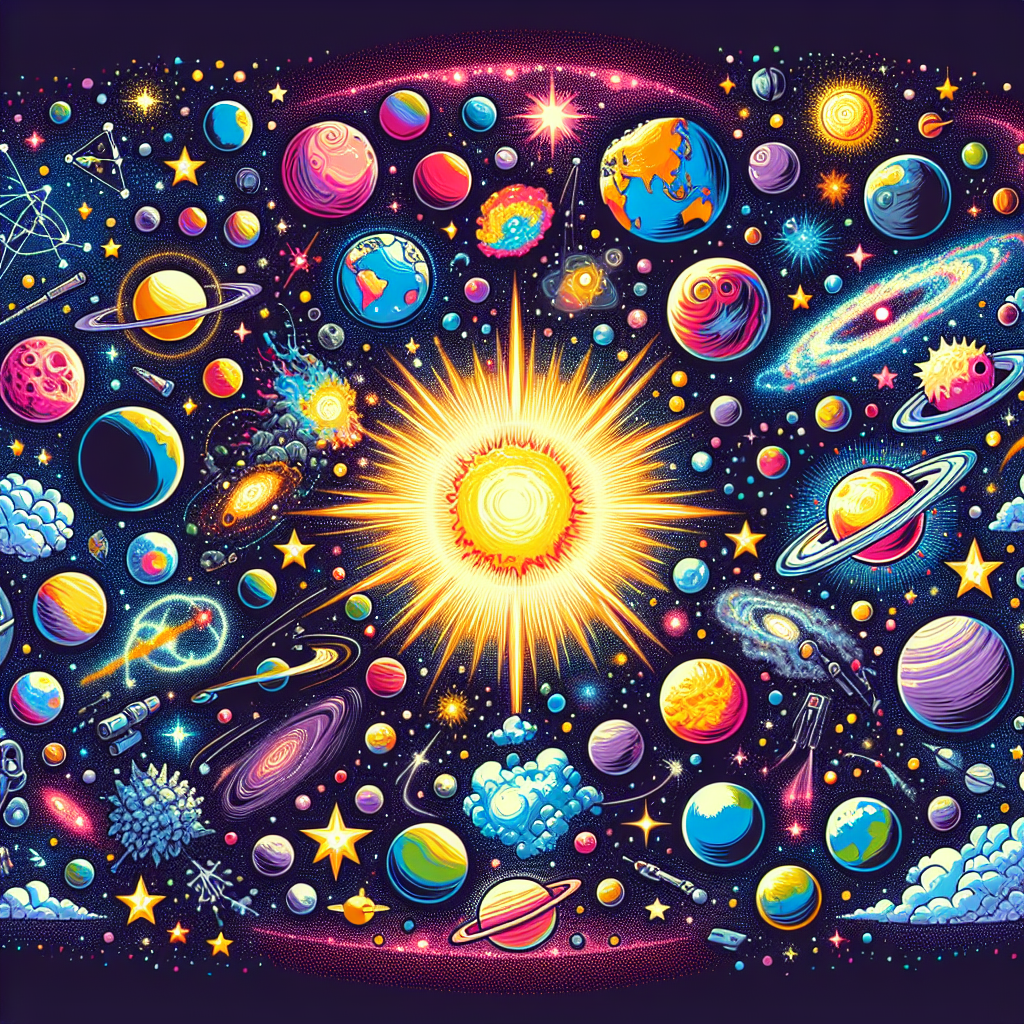
Have you ever looked up at the night sky and wondered why the stars have different colors? Stars come in various colors, from red to blue, and each hue tells us something fascinating about the star's temperature and age. Red stars are cooler and often older, while blue stars are hotter and usually younger. This color spectrum helps astronomers understand the life cycle of stars and the dynamic universe we live in.
Now, let's talk about a special phenomenon called 'Nebulae.' These are gigantic clouds of gas and dust where stars are born and sometimes die. Nebulae are like cosmic nurseries, glowing with brilliant colors due to the light from nearby stars. Each nebula's color depends on the elements within it, such as hydrogen or oxygen, which emit different colors when energized.
In our solar system, planets also have unique colors due to their surfaces and atmospheres. For instance, Mars appears red because of iron oxide, while Neptune's deep blue tint is due to methane in its atmosphere. These planetary colors not only make each planet a visual wonder but also provide clues about their composition and history.
Now, let's talk about a special phenomenon called 'Nebulae.' These are gigantic clouds of gas and dust where stars are born and sometimes die. Nebulae are like cosmic nurseries, glowing with brilliant colors due to the light from nearby stars. Each nebula's color depends on the elements within it, such as hydrogen or oxygen, which emit different colors when energized.
In our solar system, planets also have unique colors due to their surfaces and atmospheres. For instance, Mars appears red because of iron oxide, while Neptune's deep blue tint is due to methane in its atmosphere. These planetary colors not only make each planet a visual wonder but also provide clues about their composition and history.
Ask Your Kid: Ask Your Kid: If you could visit any star or planet based on its color, which one would it be and why?