
The Galactic Symphony: Sounds of the Universe
February 8, 2026
Listen to this lesson:
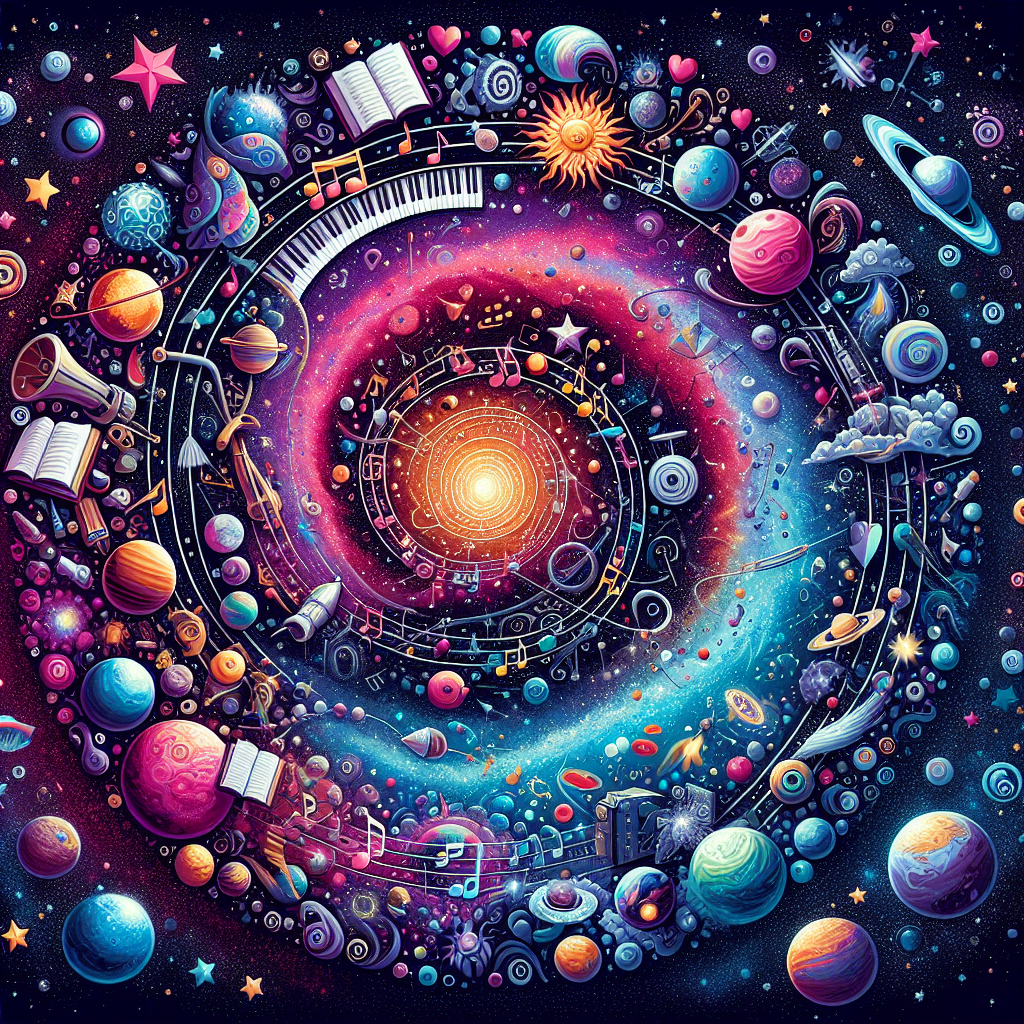
Imagine the universe as a grand orchestra, filled with cosmic harmonies and celestial rhythms. While space is mostly silent due to the lack of air to carry sound waves, scientists have discovered that planets, stars, and even black holes create fascinating vibrations and signals. These can be transformed into sounds that we can hear with special technology. For instance, the frequencies emitted by pulsars, which are rapidly spinning neutron stars, can be converted into rhythmic beats that resemble a cosmic drum. Let's explore how these 'sounds' are captured and converted into music that tells the story of our universe.
The process begins with space telescopes and radio antennas that capture electromagnetic waves emitted by celestial bodies. These waves are then translated into sound waves, creating an audio representation of space phenomena. This is similar to how a radio works, turning invisible signals into music or voices we can hear. Scientists can 'listen' to the music of the universe, gaining insights into the mysterious activities happening light-years away. By transforming these cosmic signals into sound, we can experience space in a completely unique way, connecting us even more deeply to the wonders of the universe.
Let's embark on a sonic adventure, where we decode the cosmic music and understand the stories hidden within the universe's melodies. Who knows, maybe one day you'll create your own symphony of the stars, using your imagination and creativity to transform the cosmos into a musical masterpiece.
The process begins with space telescopes and radio antennas that capture electromagnetic waves emitted by celestial bodies. These waves are then translated into sound waves, creating an audio representation of space phenomena. This is similar to how a radio works, turning invisible signals into music or voices we can hear. Scientists can 'listen' to the music of the universe, gaining insights into the mysterious activities happening light-years away. By transforming these cosmic signals into sound, we can experience space in a completely unique way, connecting us even more deeply to the wonders of the universe.
Let's embark on a sonic adventure, where we decode the cosmic music and understand the stories hidden within the universe's melodies. Who knows, maybe one day you'll create your own symphony of the stars, using your imagination and creativity to transform the cosmos into a musical masterpiece.
Ask Your Kid: Ask Your Kid: If you could create a musical piece using the sounds of the universe, what instruments would you include and why?