
Galactic Gardens: Discovering Space Botany
January 31, 2026
Listen to this lesson:
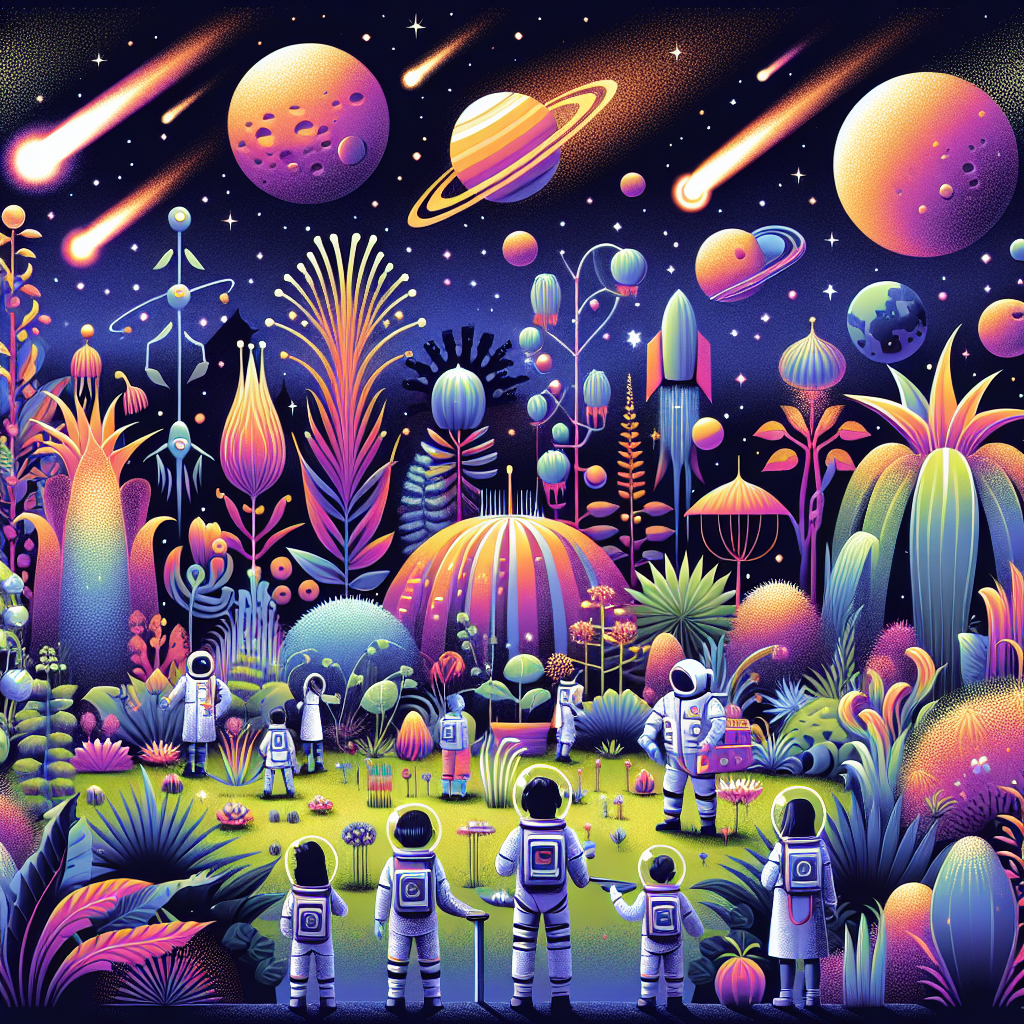
Imagine a garden floating in space! In this lesson, we'll explore how scientists are experimenting with growing plants aboard spacecraft. Plants play a crucial role in providing oxygen and food, which are essential for long-term missions to the Moon or Mars. Without gravity, plants behave differently, and researchers are learning how to adapt our green friends to thrive in these unique environments. Through innovative techniques, such as hydroponics and aeroponics, space gardens are becoming a reality, helping astronauts stay healthy and happy on their journeys.
As we venture into the wonders of space botany, consider the challenges that scientists face. Without gravity, water doesn't flow downward, and sunlight can be limited. Yet, these obstacles have inspired new solutions, like using LED lights to mimic sunlight and designing growth chambers that control temperature and humidity. By understanding how plants can survive in these conditions, we open up exciting possibilities for the future of space exploration and sustainable living on other planets.
Join us on this interstellar adventure and learn how nurturing plants in space could change the way we live and explore the universe. Discover how these floating gardens might one day help sustain human life on distant worlds, creating a symbiotic relationship between us and our leafy companions.
As we venture into the wonders of space botany, consider the challenges that scientists face. Without gravity, water doesn't flow downward, and sunlight can be limited. Yet, these obstacles have inspired new solutions, like using LED lights to mimic sunlight and designing growth chambers that control temperature and humidity. By understanding how plants can survive in these conditions, we open up exciting possibilities for the future of space exploration and sustainable living on other planets.
Join us on this interstellar adventure and learn how nurturing plants in space could change the way we live and explore the universe. Discover how these floating gardens might one day help sustain human life on distant worlds, creating a symbiotic relationship between us and our leafy companions.
Ask Your Kid: Ask Your Kid: How do you think growing plants in space could help astronauts on long missions, and what new challenges might they face?