Exploring the Cosmic Garden: The Story of Star Nurseries
January 28, 2026
Listen to this lesson:
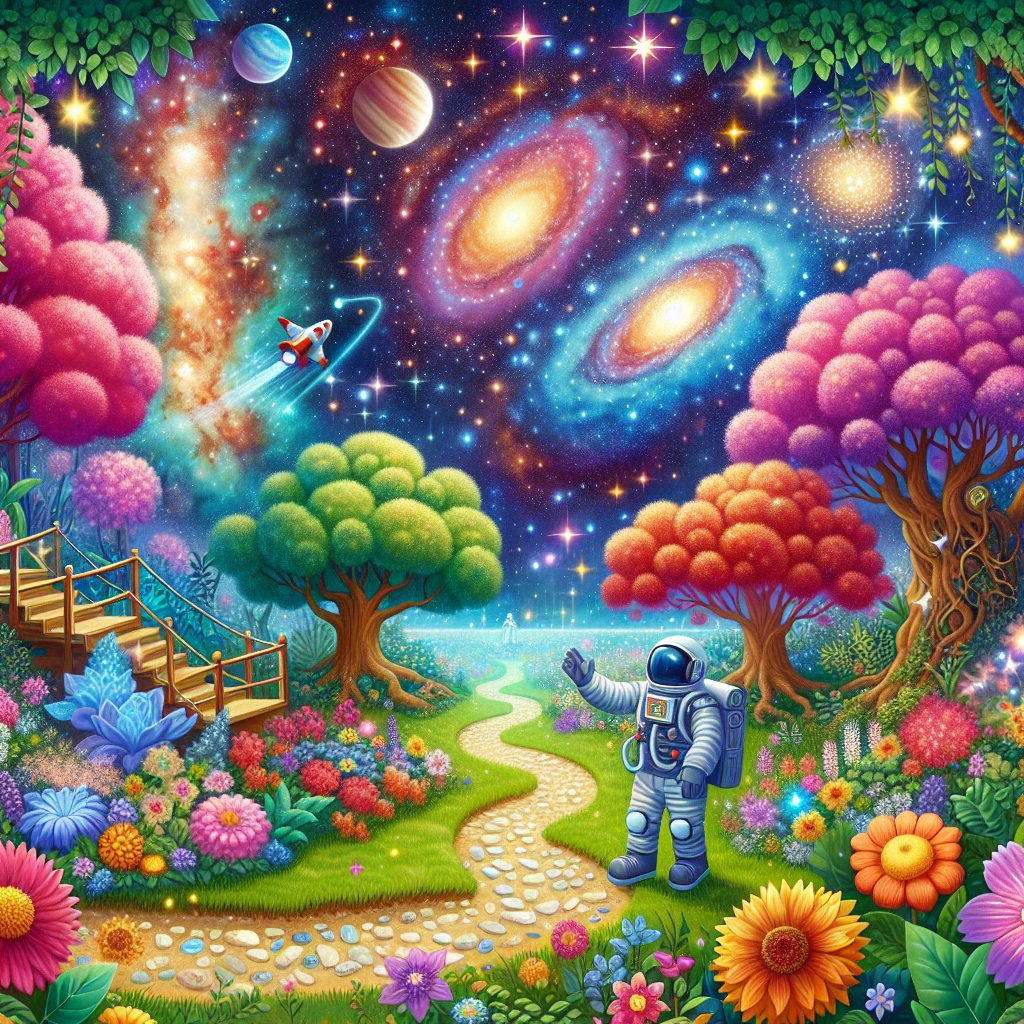
Imagine a colossal garden in space where stars are born and grow. These cosmic gardens are called nebulae, vast clouds of gas and dust scattered across the universe. Within these nebulae, the building blocks of stars come together, much like seeds in a garden, to create new stars over millions of years. As the gas and dust gather, they form dense regions that eventually ignite into brilliant, shining stars, illuminating their surroundings with radiant light.
Star nurseries are not only important for creating stars, but they also house the elements that can lead to the formation of planets, moons, and even life. The energy from the newly formed stars can push away the surrounding gas and dust, shaping the nebula and creating unique patterns. This cosmic dance continues as more stars are born, and the cycle of creation goes on in this ever-evolving garden of the universe.
As we study nebulae, we learn more about how our own solar system might have formed billions of years ago. Observing these star nurseries helps astronomers understand the life cycle of stars and the history of the cosmos. By using powerful telescopes, scientists can peer into these distant gardens and witness the birth of stars, unlocking secrets of the universe.
Star nurseries are not only important for creating stars, but they also house the elements that can lead to the formation of planets, moons, and even life. The energy from the newly formed stars can push away the surrounding gas and dust, shaping the nebula and creating unique patterns. This cosmic dance continues as more stars are born, and the cycle of creation goes on in this ever-evolving garden of the universe.
As we study nebulae, we learn more about how our own solar system might have formed billions of years ago. Observing these star nurseries helps astronomers understand the life cycle of stars and the history of the cosmos. By using powerful telescopes, scientists can peer into these distant gardens and witness the birth of stars, unlocking secrets of the universe.
Ask Your Kid: Ask Your Kid: If you could create your own star nursery, what would you want it to look like and what kinds of stars would you hope to see born there?