Mysteries of the Asteroid Belt
January 2, 2026
Listen to this lesson:
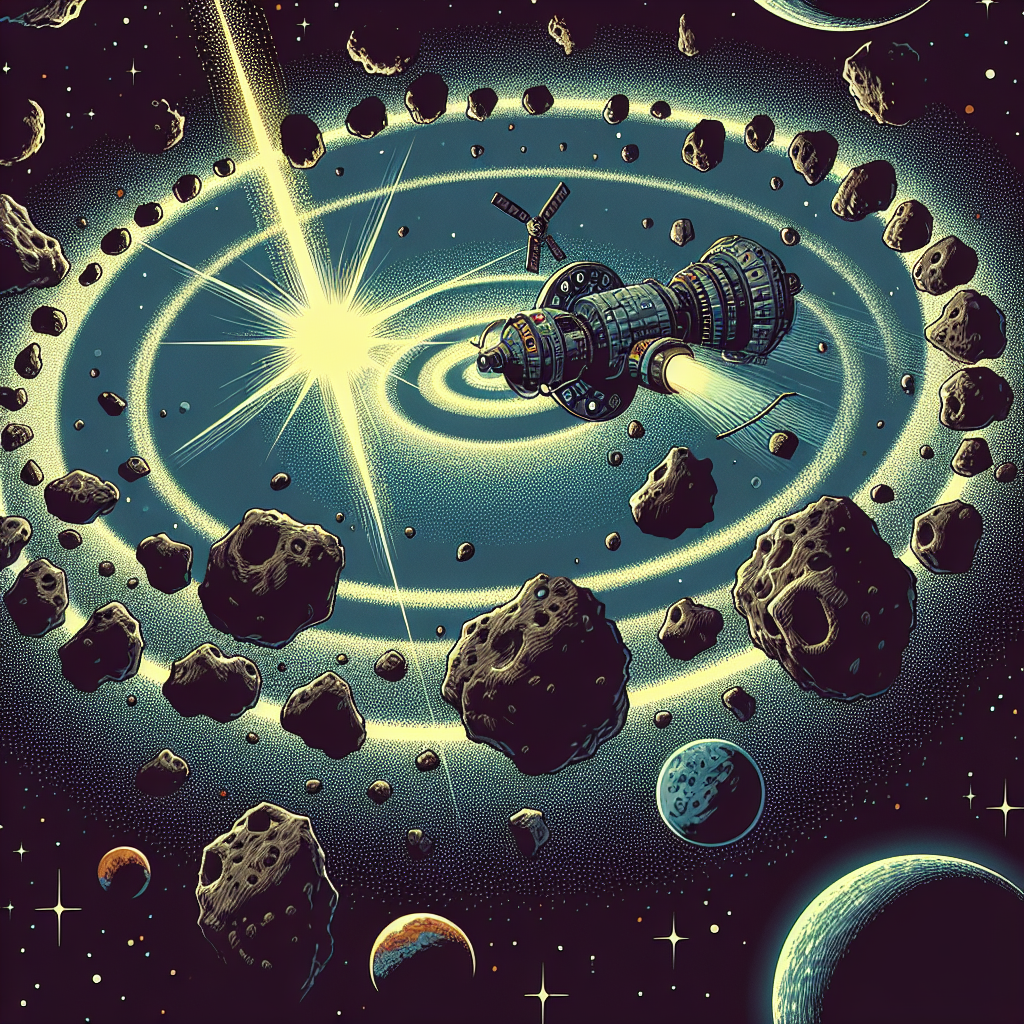
Let's embark on an adventure to the asteroid belt, a vast region located between Mars and Jupiter. This area is filled with millions of rocks and debris, remnants from the early solar system. These space rocks vary in size, from tiny pebbles to massive chunks as large as cities. Scientists believe the asteroid belt didn’t form a planet due to Jupiter's immense gravity disrupting the material's ability to coalesce. Studying these asteroids offers us clues about the birth of our solar system and the conditions that existed billions of years ago.
The asteroid Vesta, one of the largest in the belt, shines brightly enough to be visible from Earth with binoculars. It has a unique feature – a giant crater at its south pole, which might have been caused by a collision with another asteroid. Such impacts are common in the belt, and they help asteroids change shape and composition. Some of these space rocks even contain metals and water, making them valuable for future space missions and potential mining operations.
Imagine visiting the asteroid belt. You'd experience a place where the sky is filled with countless rocks floating silently in space. It's a region that, despite its chaotic appearance, holds secrets of the past and possibilities for the future. By exploring these rocky bodies, we learn more about the origins of our planet and what might be possible for human exploration beyond Earth.
The asteroid Vesta, one of the largest in the belt, shines brightly enough to be visible from Earth with binoculars. It has a unique feature – a giant crater at its south pole, which might have been caused by a collision with another asteroid. Such impacts are common in the belt, and they help asteroids change shape and composition. Some of these space rocks even contain metals and water, making them valuable for future space missions and potential mining operations.
Imagine visiting the asteroid belt. You'd experience a place where the sky is filled with countless rocks floating silently in space. It's a region that, despite its chaotic appearance, holds secrets of the past and possibilities for the future. By exploring these rocky bodies, we learn more about the origins of our planet and what might be possible for human exploration beyond Earth.
Ask Your Kid: Ask Your Kid: If you could design a spacecraft to explore the asteroid belt, what features would it have to safely navigate and study this rocky region?