
Galactic Gardeners: Growing Plants in Space
December 31, 2025
Listen to this lesson:
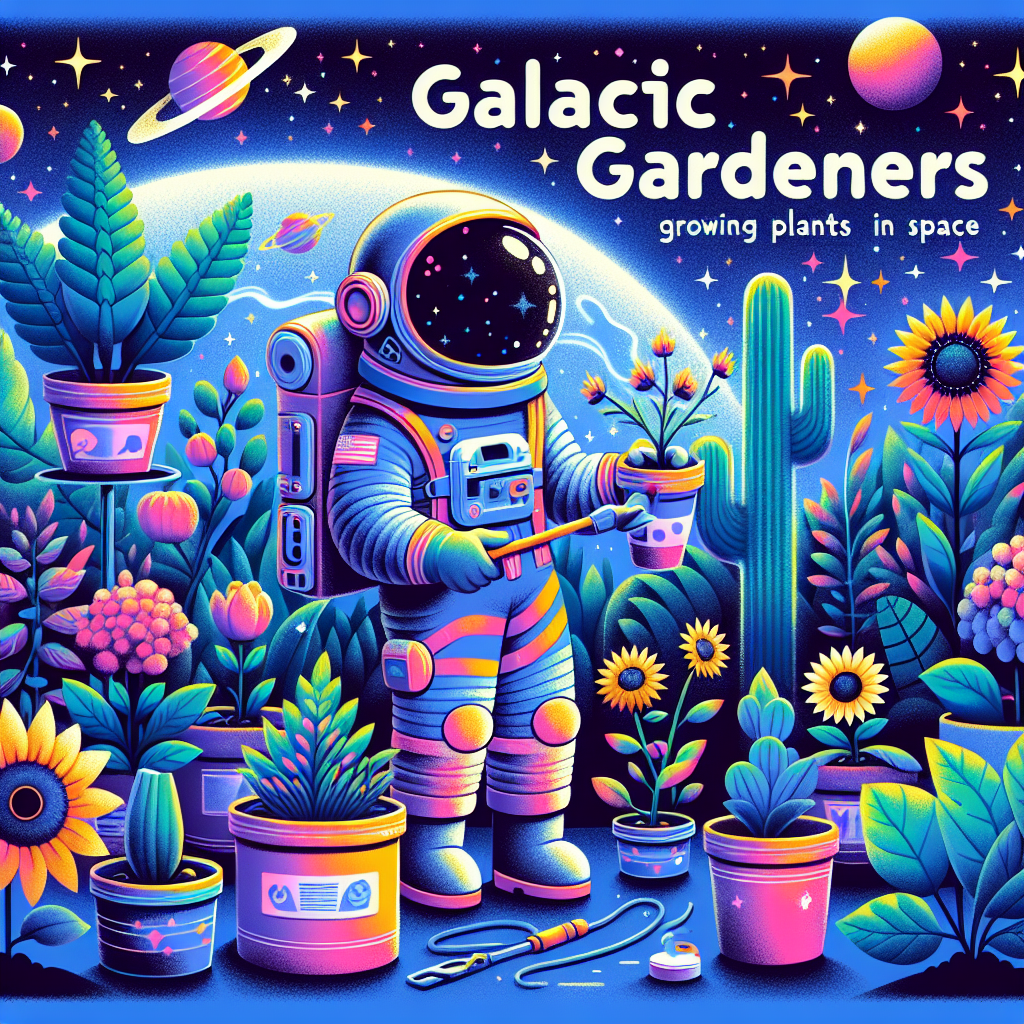
Imagine a garden floating above Earth, where astronauts cultivate plants to support life on long space missions. In the unique environment of space, plants behave differently. Without gravity pulling roots downwards, plants must rely on light and other cues to determine which direction to grow. Scientists are experimenting with different types of plants to find the best candidates for space farming, focusing on those that can thrive in microgravity conditions while providing essential nutrients for astronauts. This space gardening is not only crucial for future space exploration but also offers insights into sustainable farming practices here on Earth.
Growing plants in space presents unique challenges and opportunities. For instance, watering plants in a zero-gravity environment requires innovative techniques to ensure that the roots receive moisture without soil to support them. This has led to the development of hydroponic systems, where plants are grown in nutrient-rich water solutions. These systems are designed to recycle water and nutrients efficiently, making them an essential part of the closed-loop life support systems being developed for long-duration missions. Additionally, plants in space contribute to air purification by absorbing carbon dioxide and releasing oxygen, creating a healthier environment for astronauts.
Beyond technical challenges, space gardening has sparked creativity and curiosity among scientists and students alike. Schools around the world are participating in programs that simulate space farming, encouraging young minds to think about how they might contribute to future space agriculture. These experiments not only promote scientific thinking but also inspire a sense of wonder about the possibilities of life beyond our planet.
Growing plants in space presents unique challenges and opportunities. For instance, watering plants in a zero-gravity environment requires innovative techniques to ensure that the roots receive moisture without soil to support them. This has led to the development of hydroponic systems, where plants are grown in nutrient-rich water solutions. These systems are designed to recycle water and nutrients efficiently, making them an essential part of the closed-loop life support systems being developed for long-duration missions. Additionally, plants in space contribute to air purification by absorbing carbon dioxide and releasing oxygen, creating a healthier environment for astronauts.
Beyond technical challenges, space gardening has sparked creativity and curiosity among scientists and students alike. Schools around the world are participating in programs that simulate space farming, encouraging young minds to think about how they might contribute to future space agriculture. These experiments not only promote scientific thinking but also inspire a sense of wonder about the possibilities of life beyond our planet.
Ask Your Kid: Ask Your Kid: How do you think plants growing in space could change the way we live on Earth?