The Cosmic Symphony: Exploring Planetary Sounds
December 24, 2025
Listen to this lesson:
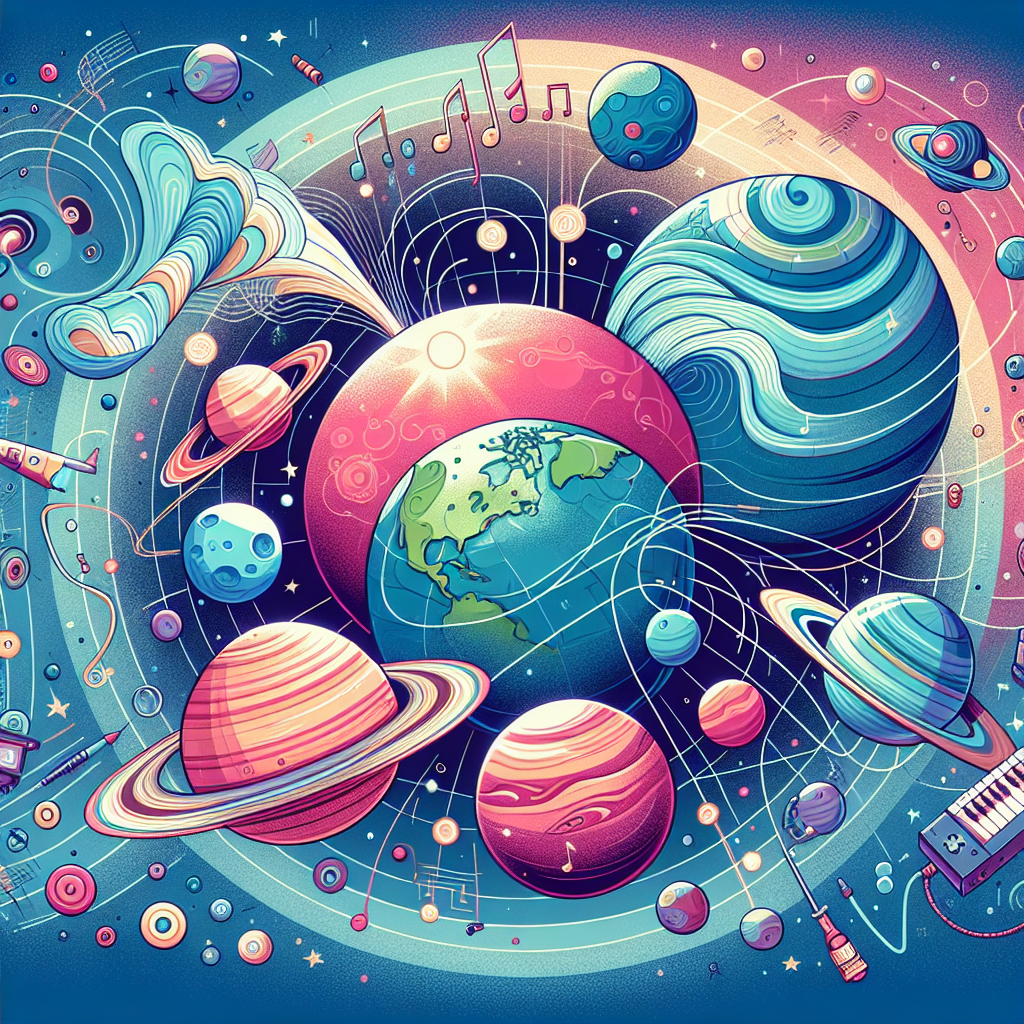
Have you ever wondered what music from space might sound like? While space is a vacuum and doesn't carry sound waves like air does on Earth, scientists have found imaginative ways to translate signals from planets and other celestial bodies into sound. This process is called 'sonification,' turning data into audio tracks that help us understand the universe in a whole new way. Imagine the gentle hum of Saturn's rings or the rhythmic beeping from a distant star! These cosmic melodies can reveal information about the environment and characteristics of celestial bodies, allowing us to 'listen' to space in a truly unique way.
In a fun activity, kids can create their own 'space symphony' by using simple instruments or digital tools to mimic the sounds of different planets. For example, the deep, rumbling bass might represent the gas giant Jupiter, while a high-pitched whistle could emulate the sharp winds on Neptune. This exercise not only sparks creativity but also enhances their understanding of space phenomena by connecting auditory elements to visual and scientific concepts.
By exploring the universe through sound, children can develop a multidimensional appreciation of space, blending art and science. This innovative method of learning encourages them to think outside the box and engage with astronomy in a playful yet educational manner.
In a fun activity, kids can create their own 'space symphony' by using simple instruments or digital tools to mimic the sounds of different planets. For example, the deep, rumbling bass might represent the gas giant Jupiter, while a high-pitched whistle could emulate the sharp winds on Neptune. This exercise not only sparks creativity but also enhances their understanding of space phenomena by connecting auditory elements to visual and scientific concepts.
By exploring the universe through sound, children can develop a multidimensional appreciation of space, blending art and science. This innovative method of learning encourages them to think outside the box and engage with astronomy in a playful yet educational manner.
Ask Your Kid: Ask Your Kid: If you could compose a piece of music inspired by a planet, which one would you choose and why?