
Journey Through the Cosmic Ice: Discovering Space Icebergs
December 16, 2025
Listen to this lesson:
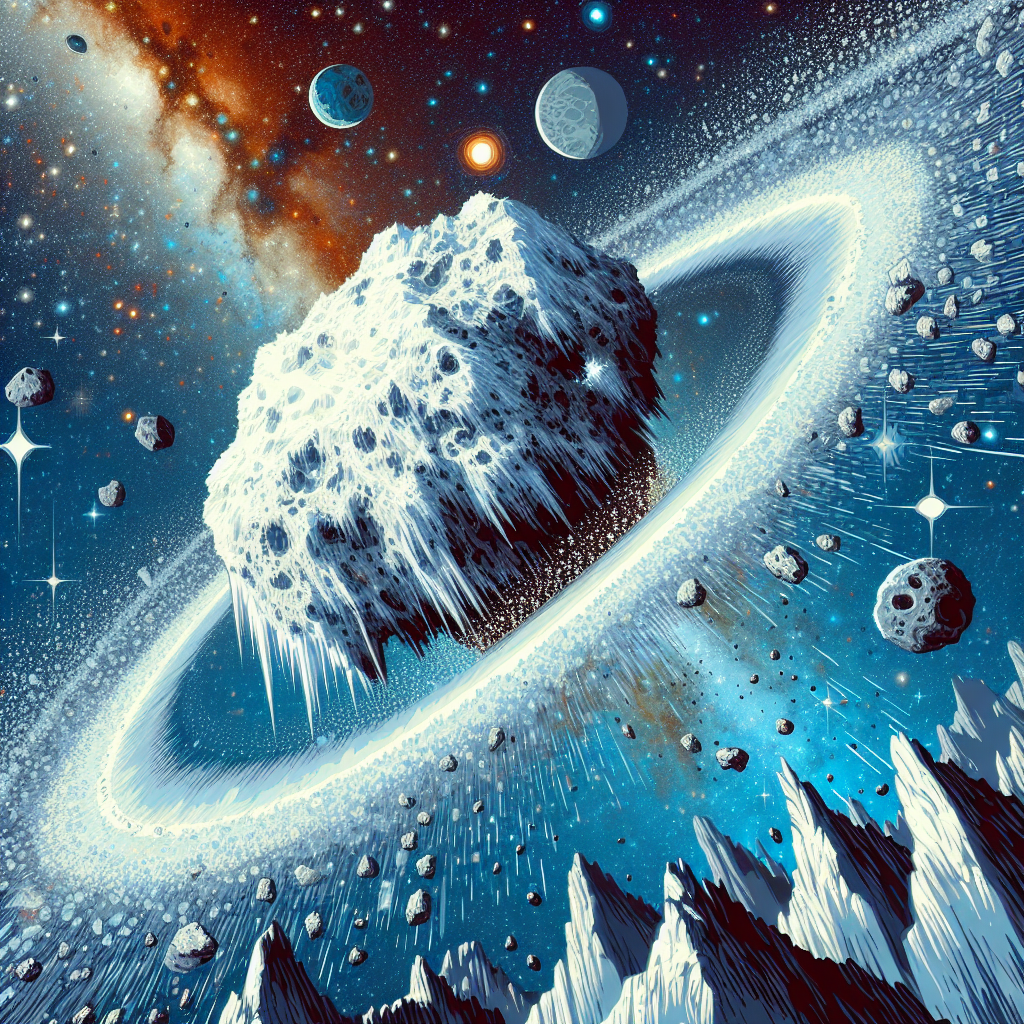
Imagine floating through space and encountering giant blocks of ice drifting around like majestic icebergs in the cosmic ocean. These celestial icebergs, primarily composed of water, methane, and ammonia, are known as asteroids. They are remnants from the early solar system, providing clues about the materials that existed billions of years ago. As they travel through the vastness of space, these icy travelers can sometimes collide with other bodies, releasing gases and forming beautiful, ephemeral tails that glimmer in the sunlight.
Not only are these space icebergs fascinating remnants of history, but they also hold the key to understanding more about the potential for life beyond Earth. The ice within them can contain organic compounds, the building blocks of life, sparking curiosity about the possibility of life existing somewhere else in the universe. Scientists study these ancient ice formations to uncover the mysteries of how life may have begun on Earth and how it might emerge elsewhere.
As we explore these frozen wonders, we also learn about the potential for future space missions. The water trapped in these icy structures could one day be harvested to support human life in space or fuel spacecrafts on longer journeys. By studying these frozen time capsules, we unlock secrets of the past and possibilities for the future, inspiring a new generation of space explorers.
Not only are these space icebergs fascinating remnants of history, but they also hold the key to understanding more about the potential for life beyond Earth. The ice within them can contain organic compounds, the building blocks of life, sparking curiosity about the possibility of life existing somewhere else in the universe. Scientists study these ancient ice formations to uncover the mysteries of how life may have begun on Earth and how it might emerge elsewhere.
As we explore these frozen wonders, we also learn about the potential for future space missions. The water trapped in these icy structures could one day be harvested to support human life in space or fuel spacecrafts on longer journeys. By studying these frozen time capsules, we unlock secrets of the past and possibilities for the future, inspiring a new generation of space explorers.
Ask Your Kid: Ask Your Kid: If you could create a spaceship to visit one of these cosmic icebergs, what features would it have and why?