
Galactic Gardens: The Solar System's Hidden Greenhouses
December 15, 2025
Listen to this lesson:
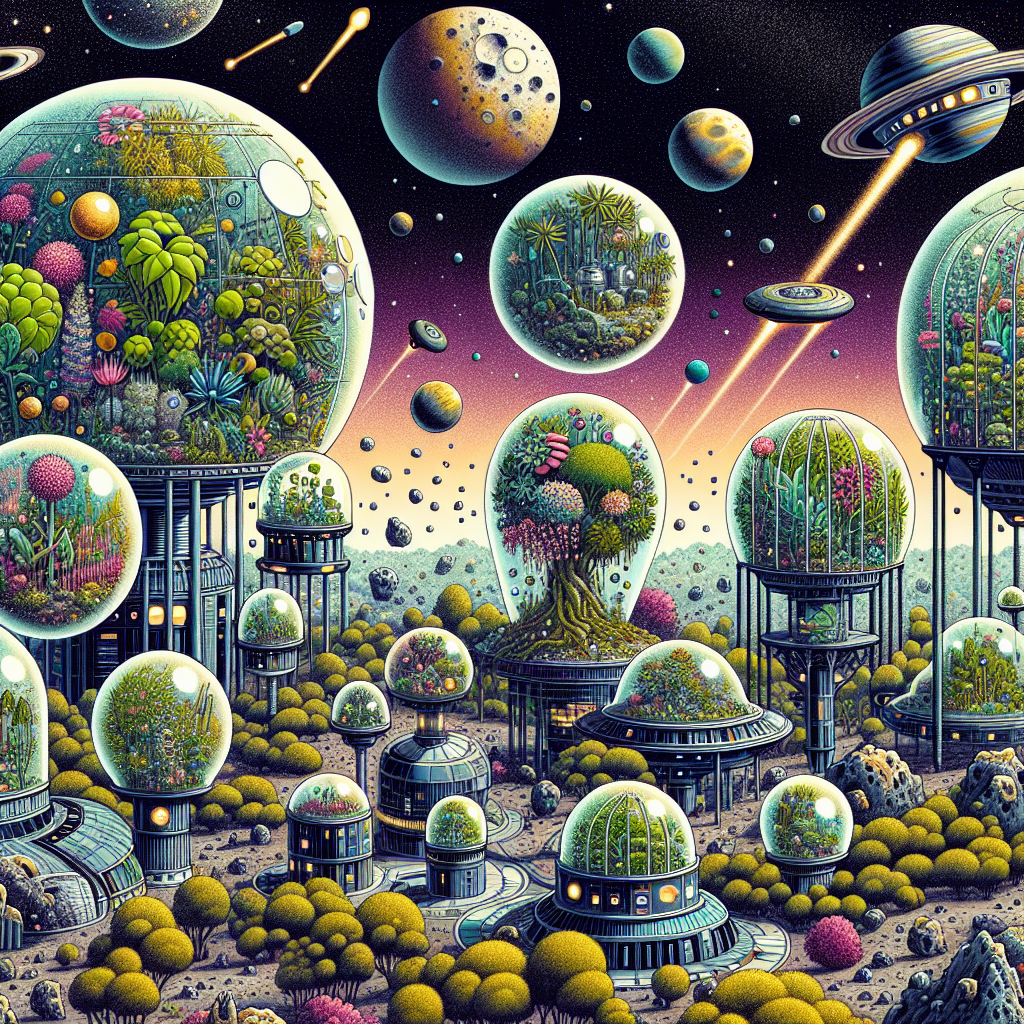
Imagine a garden in space where each planet contributes its unique element to a cosmic greenhouse. In this lesson, we explore how different planets and moons within our solar system might host plant life if conditions were slightly altered. For instance, Mars, with its iron-rich soil, could grow rusty red plants that thrive on sunlight filtered through its thin atmosphere. Meanwhile, Europa, one of Jupiter's icy moons, might sustain underwater gardens beneath its frozen surface, nourished by geothermal vents.
Next, let's travel to Venus, where the planet's proximity to the Sun creates a warm environment, turning hypothetical plants into heat-resistant species, much like cacti on Earth. These Venusian plants might develop reflective surfaces to cope with the intense sunlight. Finally, Titan, Saturn's largest moon, has lakes of methane, which could give rise to plants that convert methane into energy, similar to how Earth plants use photosynthesis with sunlight.
By imagining how plants might adapt to these diverse worlds, we learn about the fascinating possibilities of extraterrestrial ecosystems and what factors are necessary for life. This exercise not only sparks creativity but also enhances our understanding of biology and planetary science.
Next, let's travel to Venus, where the planet's proximity to the Sun creates a warm environment, turning hypothetical plants into heat-resistant species, much like cacti on Earth. These Venusian plants might develop reflective surfaces to cope with the intense sunlight. Finally, Titan, Saturn's largest moon, has lakes of methane, which could give rise to plants that convert methane into energy, similar to how Earth plants use photosynthesis with sunlight.
By imagining how plants might adapt to these diverse worlds, we learn about the fascinating possibilities of extraterrestrial ecosystems and what factors are necessary for life. This exercise not only sparks creativity but also enhances our understanding of biology and planetary science.
Ask Your Kid: Ask Your Kid: If you could design a plant for one of these planets or moons, what special features would it have to survive there?