Discovering the Mysteries of Moon Phases
December 10, 2025
Listen to this lesson:
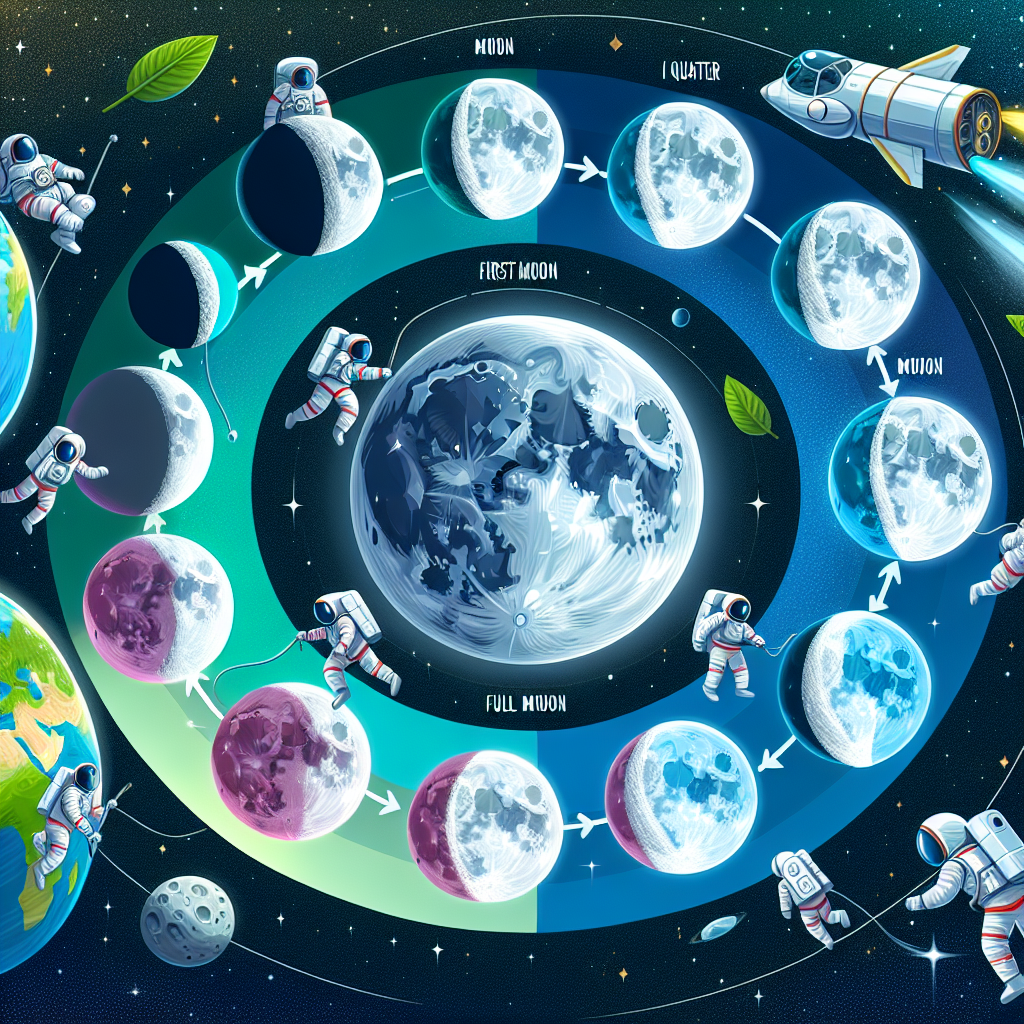
Have you ever wondered why the Moon looks different throughout the month? The Moon goes through a fascinating cycle of phases as it travels around Earth. This cycle lasts about 29.5 days and includes phases like the New Moon, when the Moon is nearly invisible, and the Full Moon, when it shines brightly in the night sky. As the Moon orbits Earth, the sunlight illuminates different portions, creating the beautiful patterns we see each night.
Let's dive deeper into how these phases occur. Imagine a flashlight representing the Sun shining on a ball, which is the Moon, moving around a central point, Earth. As the ball orbits, only parts of it are lit up, while others are in shadow. This is why we sometimes see a thin crescent or a half-moon. Each phase has a special name and significance, teaching us about the Moon's journey and effects on Earth, such as tides.
Learning about moon phases helps us understand more about our place in the universe. It's amazing to think how these changes have guided ancient sailors or inspired stories and myths. Observing the Moon can be a fun way to connect with nature and explore the sky’s wonders. Next time you look up at the Moon, think about its journey and what phase it’s in!
Let's dive deeper into how these phases occur. Imagine a flashlight representing the Sun shining on a ball, which is the Moon, moving around a central point, Earth. As the ball orbits, only parts of it are lit up, while others are in shadow. This is why we sometimes see a thin crescent or a half-moon. Each phase has a special name and significance, teaching us about the Moon's journey and effects on Earth, such as tides.
Learning about moon phases helps us understand more about our place in the universe. It's amazing to think how these changes have guided ancient sailors or inspired stories and myths. Observing the Moon can be a fun way to connect with nature and explore the sky’s wonders. Next time you look up at the Moon, think about its journey and what phase it’s in!
Ask Your Kid: Ask Your Kid: Why do you think ancient cultures were fascinated by the changes in the Moon's appearance?