Exploring the Cosmic Symphony: Sounds of Space
December 2, 2025
Listen to this lesson:
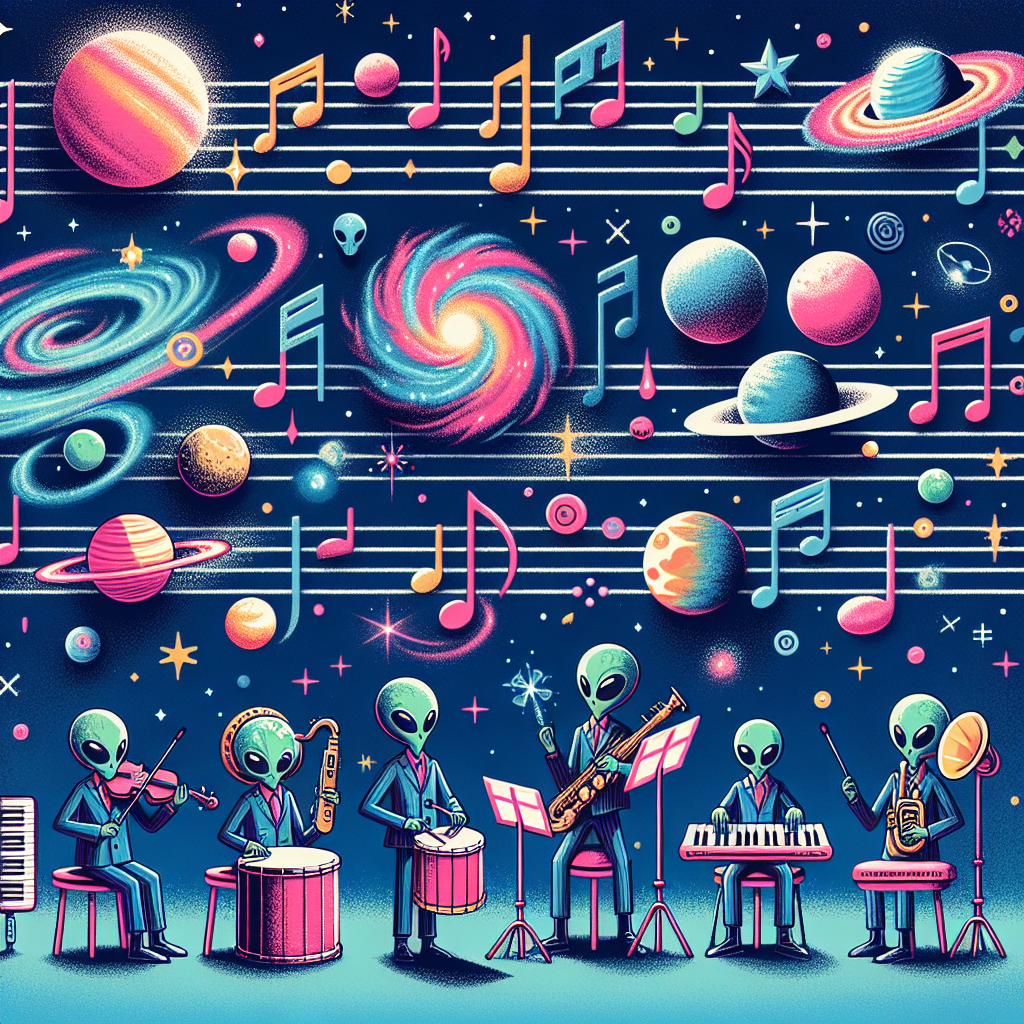
Did you know that space isn't as silent as we once thought? While sound can't travel through the vacuum of space like it does on Earth, scientists have discovered that space has its own kind of music. By using special instruments, they can capture radio waves and electromagnetic vibrations from celestial bodies and convert them into sounds we can hear. These sounds range from the eerie whistles of Saturn's rings to the rhythmic pulses of a pulsar star. Each celestial object has its own unique 'song,' creating a cosmic symphony that provides valuable insights into the universe's secrets.
In our lesson today, we'll explore how these space sounds are collected and why they're important for astronomers. We'll learn about the instruments on spacecraft that listen to the universe, like antennas and sensors, which are designed to detect the faintest of signals. By understanding these cosmic tunes, scientists can gather information about the composition, temperature, and motion of planets and stars, helping them unravel the mysteries of the cosmos.
We'll also create our own space soundscapes by using simple tools to simulate the sounds of different planets and stars. This hands-on activity will help us appreciate the complexity and beauty of space's auditory wonders. Get ready to unleash your inner space composer and embark on a journey through the music of the universe!
In our lesson today, we'll explore how these space sounds are collected and why they're important for astronomers. We'll learn about the instruments on spacecraft that listen to the universe, like antennas and sensors, which are designed to detect the faintest of signals. By understanding these cosmic tunes, scientists can gather information about the composition, temperature, and motion of planets and stars, helping them unravel the mysteries of the cosmos.
We'll also create our own space soundscapes by using simple tools to simulate the sounds of different planets and stars. This hands-on activity will help us appreciate the complexity and beauty of space's auditory wonders. Get ready to unleash your inner space composer and embark on a journey through the music of the universe!
Ask Your Kid: Ask Your Kid: If you could listen to the sounds of any planet or star, which one would you choose and why?